
What Does It Feel Like to Be Truly Heard in Counselling?
This blog explores why feeling truly heard can be one of the most important parts of therapy and how being given space to explore your thoughts and feelings, without judgement or pressure, can lead to deeper understanding and self-compassion.
Carey Guite
6/24/20264 min read
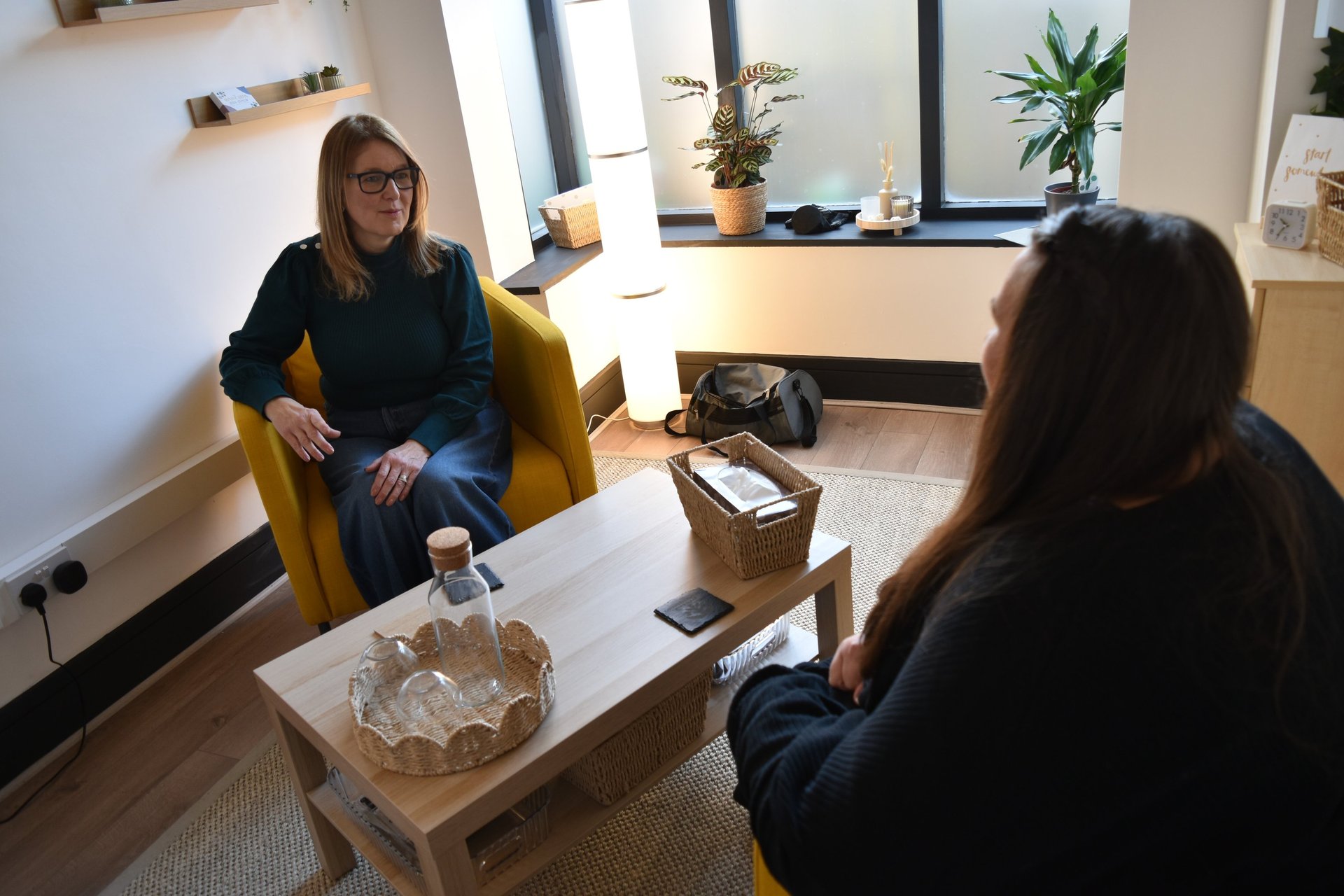

What Does It Feel Like to Be Truly Heard in Counselling?
You don't need to know what to say
Many people come to counselling believing that they need to know what they want to talk about or have some idea of how they are going to explain how they are feeling. They may worry that they will talk too much, become upset or go off on a tangent and lose their train of thought. Others tell me that they have written pages of notes because they are frightened that they will forget something important. Yet counselling is rarely about saying the right thing. More often, it is about having the space to begin making sense of experiences and feelings that may have been carried for a very long time.
The importance of being given space
There is something incredibly powerful about being able to speak without feeling rushed or interrupted. In everyday life conversations often move quickly and, with the best intentions, people offer reassurance, advice or try to help us look for the positives. Whilst these responses usually come from a place of care, they can sometimes move us away from the feelings that are asking to be heard. You may begin talking about a difficult conversation at work and gradually find yourself recognising a much deeper fear of not being good enough. You may start by describing an argument with a partner and come to realise that you have spent years putting other people's needs before your own. Sometimes our thoughts and feelings need time to unfold before we can fully understand what they are trying to tell us.
Staying with difficult feelings
For this reason, counselling is not about trying to make you feel better as quickly as possible. It can be tempting for all of us to move away from sadness, anxiety or despair and search instead for something more hopeful, but there are times when what we need most is someone who is willing to stay alongside us without trying to change what we are experiencing. By allowing difficult feelings to be acknowledged rather than avoided, they often become easier to understand and less overwhelming. We begin to see that our responses make sense within the context of our experiences rather than believing there is something wrong with us. Sometimes this process can help us make sense of experiences such as anxiety, low self-worth, people pleasing or the feeling that we have to hold everything together. Rather than looking for quick solutions, counselling offers the opportunity to explore where these patterns may have developed and, perhaps for the first time, begin to relate to ourselves with greater compassion and understanding.
Healing through relationship
Within person-centred counselling there is a concept known as relational depth, described by Mearns and Cooper (2018) as moments of profound connection where both client and counsellor experience a genuine sense of trust, safety and understanding. These moments cannot be created through a particular technique or by asking the perfect question. They develop naturally within a relationship where there is acceptance, authenticity and a sense that you can bring all parts of yourself into the room without fear of judgement. It is this relationship, rather than advice or solutions, that often provides the conditions for growth and change.
Finding compassion for yourself
Many people have spent years feeling that they need to hold everything together, stay strong or keep everyone else comfortable. Perhaps vulnerability has never felt safe or expressing your needs has led to disappointment or criticism in the past. If that has been your experience, allowing yourself to slow down and simply talk can feel unfamiliar and even uncomfortable. There may be long pauses, moments where you lose your words or find yourself exploring something that you had not expected to speak about. Rather than seeing these moments as something to move past, they can become opportunities to understand yourself with greater compassion and curiosity.
At your own pace
Counselling does not require you to arrive with answers or to share everything in your first session. There is no expectation that you will be ready to trust immediately or that every session will reach a place of deep emotional connection. Some relationships take time to develop and every person's pace is different. What matters is having a space where you are listened to with care, where your experiences are not dismissed or judged and where you are given the freedom to explore what feels important to you. Sometimes it is within that steady and accepting relationship that people begin to hear themselves differently, discovering that beneath years of self-criticism, anxiety or overwhelm there is a quieter voice that has simply been waiting to be heard.
References
Mearns, D., & Cooper, M. (2018). Working at Relational Depth in Counselling and Psychotherapy (2nd ed.). Sage.
Mearns, D., & Thorne, B. (2013). Person-Centred Counselling in Action (4th ed.). Sage.
Further reading
If you'd like to learn more about person-centred counselling and what to expect from therapy, the BACP provides helpful information about counselling and different therapeutic approaches.
If this resonates with you
Perhaps counselling is not about finding someone with all the answers, but about finding a relationship where you can explore your thoughts and feelings without judgement, at your own pace. If you're considering counselling and would like to find out more, you're welcome to get in touch here to arrange a free initial conversation. There is no pressure or expectation to commit, just an opportunity to ask questions and see whether Braver Days feels like the right space for you.
Contact
Get in touch
Phone / Whatsapp
07421 501597
© 2025. All rights reserved.